


NEWYou can now listen to Fox News articles!
The Supreme Court on Wednesday will weigh the legality of President Donald Trump’s executive order seeking to end birthright citizenship in the U.S. — a landmark court fight that could profoundly impact the lives of millions of Americans and lawful U.S. residents.
At issue in the case, Trump v. Barbara, is an executive order Trump signed on his first day back in office. The order in question seeks to end automatic citizenship — or “birthright citizenship” — for nearly all persons born in the U.S. to undocumented parents, or to parents with temporary non-immigrant visas in the U.S.
The stakes in the case are high, putting on a collision course more than a century of executive branch action, Supreme Court precedent, and the text of the Constitution itself — or, more specifically, the Citizenship Clause of the 14th Amendment.
FEDERAL JUDGE BLOCKS TRUMP’S BIRTHRIGHT CITIZENSHIP BAN FOR ALL INFANTS, TESTING LOWER COURT POWERS
Trump administration officials view the order, and the high court’s consideration of the case, as a key component of his hard-line immigration agenda — an issue that has become a defining feature of his second White House term.
Opponents argue the effort is unconstitutional and unprecedented, and could impact an estimated 150,000 children born in the U.S. annually to non-citizens.
A ruling in Trump’s favor would represent a seismic shift for immigration policy in the U.S., and would upend long-held notions of citizenship that Trump and his allies argue are misguided. It would also yield immediate, operational consequences for infants born in the U.S., putting the impetus on Congress and the Trump administration to immediately act to clarify their status.
Here’s what to expect ahead of today’s oral arguments:
What’s at stake?
Justices will weigh Trump’s executive order 14160, or “Protecting the Meaning and Value of American Citizenship.” The order directs all U.S. government agencies to refuse to issue citizenship documents to children born in the U.S. to illegal immigrants, or children born to parents who are in the U.S. legally but with temporary, non-immigrant visas.
The order would apply retroactively to all newborns born in the U.S. after Feb. 19, 2025.
Trump’s executive order prompted a flurry of lawsuits in the days after its signing. Critics argued that, among other things, the order violated the Citizenship Clause of the 14th Amendment, which grants citizenship to “all persons born … in the United States, and subject to the jurisdiction thereof, are citizens of the United States.”
Lawyers for the Trump administration, meanwhile, centered their case on the “subject to jurisdiction thereof” phrase, which they argue was intended at the time of its passage to narrowly “grant citizenship to newly freed slaves and their children” after the Civil War, and has been misinterpreted in the many years since.
U.S. Solicitor General D. Sauer urged the high court to take up the case last October, arguing that a pair of lower court rulings were overly broad and relied on the “mistaken view” that “birth on U.S. territory confers citizenship on anyone subject to the regulatory reach of U.S. law became pervasive, with destructive consequences.”
“Those decisions confer, without lawful justification, the privilege of American citizenship on hundreds of thousands of unqualified people,” he said.
TRUMP TO BEGIN ENFORCING BIRTHRIGHT CITIZENSHIP ORDER AS EARLY AS THIS MONTH, DOJ SAYS
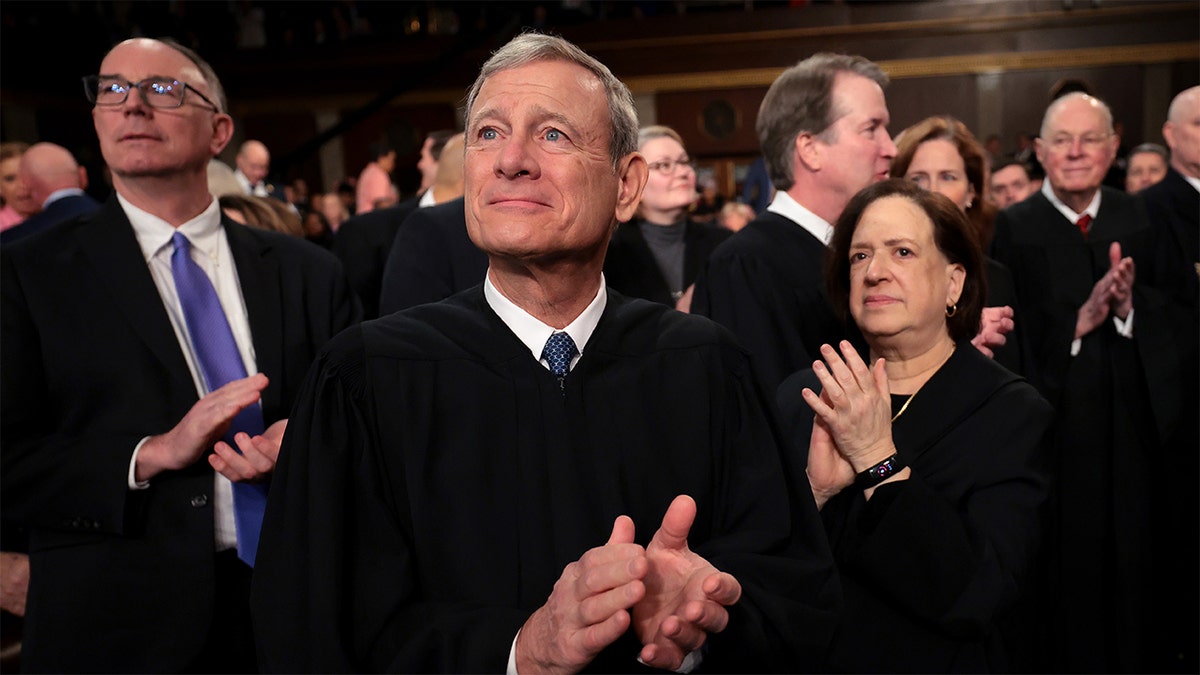
He also argued that the lower court rulings overstepped, and “invalidated a policy of prime importance to the president and his administration in a manner that undermines our border security.”
Justices on the high court will have no shortage of strings to pull on in considering the executive order, or questioning lawyers during oral arguments.
What’s changed?
The Supreme Court will use Wednesday’s arguments to weigh — to varying degrees — the text of the 14th Amendment, legal precedent, and text of the 1952 Immigration and Nationality Act, among other issues cited by Sauer, the ACLU, and authors of the dozens of amicus briefs filed to the court since it agreed to review the case last fall.
Legal experts told Fox News Digital that they expect Sauer could be in for an uphill battle in convincing a five-justice majority to unwind more than 125 years of precedent and text at issue in the case.
Despite their consensus, however, the court’s conservative bloc will still face thorny issues in reconciling more than a century of court precedent with the narrower reading of the 14th Amendment embraced by the Trump administration.
Justices are likely to focus closely on precedent in the Supreme Court case, United States v. Wong Kim Ark — a 1898 ruling in which the Supreme Court ruled that the son of two Chinese immigrants born in the U.S. was indeed a U.S. citizen.
The case is widely considered to be the modern precedent for birthright citizenship, including related cases heard by the high court in the decades since.
Others cited the text of the 1952 Immigration and Nationality Act statute passed by Congress, which essentially mirrors the text of the 14th Amendment in conferring legal status to persons born in the U.S., as yet another argument that could tip the scales in the migrants’ favor.
“I can think of at least five reasons off the top of my head why the Supreme Court should say that the citizenship clause means today what it has always meant,” Amanda Frost, a professor at the University of Virginia School of Law who specializes in immigration and citizenship issues, told Fox News Digital.
SUPREME COURT SIGNALS IT MAY LIMIT KEY VOTING RIGHTS ACT RULE
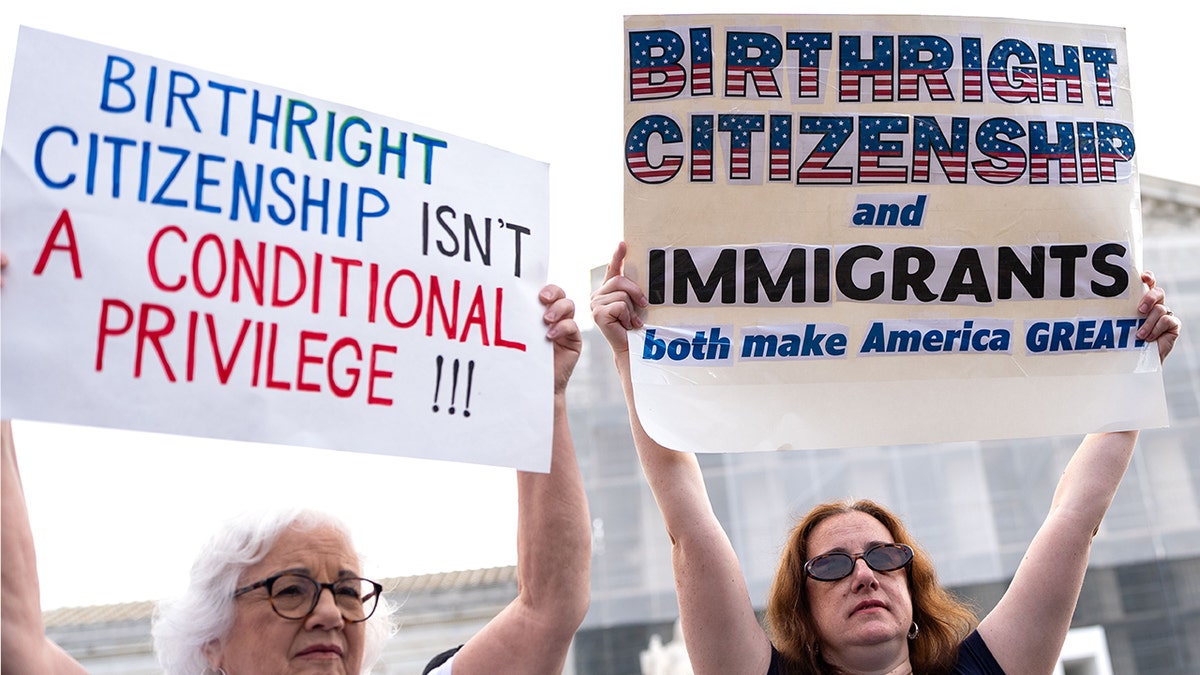
“There is text. There is original public understanding, which certainly includes Wong Kim Ark, but also five or six Supreme Court cases after that,” Frost said.
“There is executive branch practice for the last century,” she added, “which is relevant as well when you’re interpreting the Constitution, and weighing [the question of], ‘What is the longstanding understanding of a constitutional provision by every other actor?’”
“I don’t see how they could easily count to five,” Akhil Amar, a professor at Yale Law School, told Fox News Digital in an interview, speaking of the majority votes needed.
“Even if I lose on one issue, I win on [many others],” Amar said, before ticking through a list of reasons why the Supreme Court, in his view, might swing in favor of the migrant class in question, and ACLU legal director Cecillia Wang, who is arguing the case Wednesday on behalf of the migrants.
Others agreed, albeit with a bit more reservation.
“I don’t think history supports the Trump administration’s view,” John Yoo, a law professor at the University of California Berkeley and former lawyer during the Bush administration, told Fox News Digital on the strength of the administration’s case.
JUDGES V TRUMP: HERE ARE THE KEY COURT BATTLES HALTING THE WHITE HOUSE AGENDA
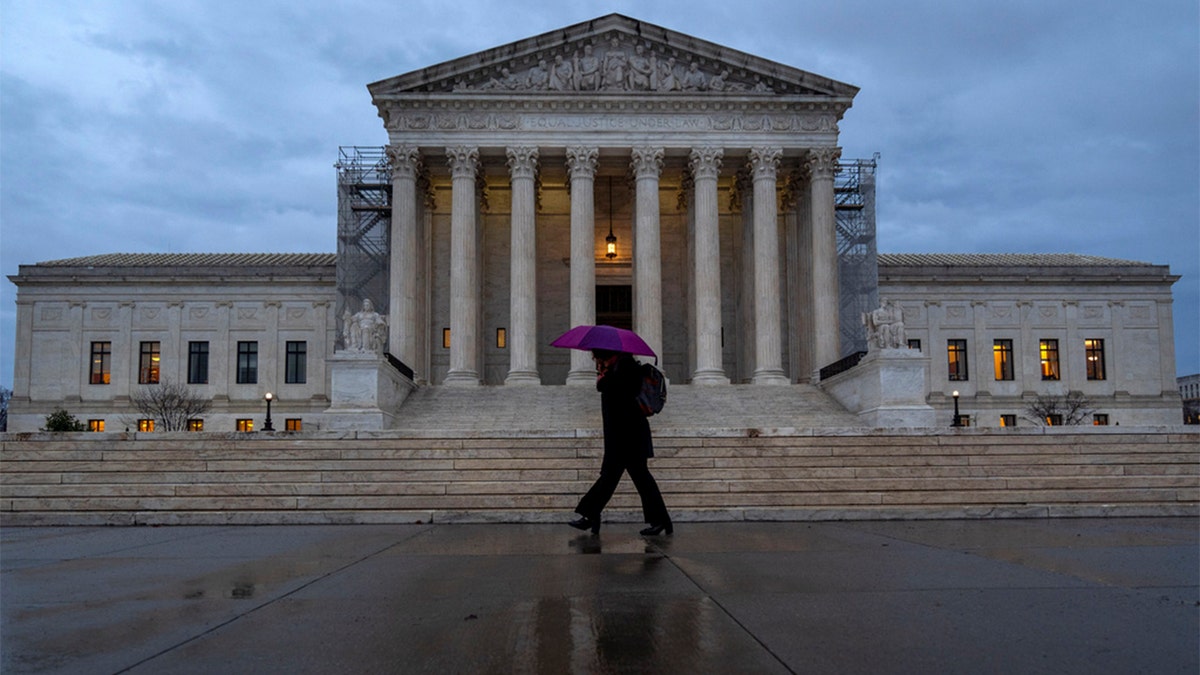
Stateless newborns, enforcement issues
Another question will be one of enforcement. Trump’s executive order does not codify the legal status that should be conferred to children who are born in the U.S. to holders of temporary, long-term visas — including student visas and H1B visas, legal experts told Fox News Digital.
Frost, the University of Virginia Law professor, noted that Congress has not provided a pathway to legal status for the class of children who would be born in the U.S. and not granted citizenship. This means that the government would essentially need to act at lightning speed to confer some sort of status — be it temporary or longer-term — to newborns, should the justices side with Trump.
“The parents may have applied for a green card,” Frost said of newborns born to illegal immigrants, should the court allow Trump’s order to take force. “They might get the green card the next day.”
“It would not matter,” she said. “The child would not be a citizen.”
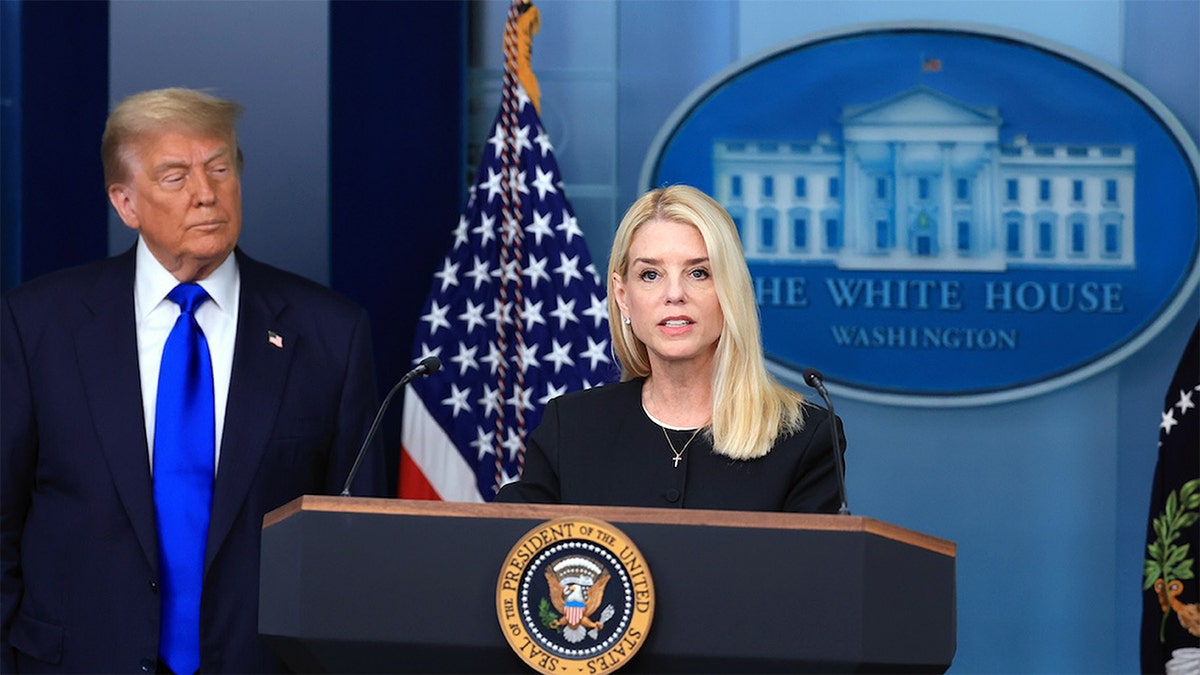
Yoo, Amar, and others cited similar concerns voiced by justices briefly during oral arguments in another birthright citizenship case, Trump v. CASA, last year. The administration asked the court to review the case not on the merits of the order, but as a means of challenging so-called “universal,” or nationwide injunctions issued by federal court judges.
Despite the focus on the lower court powers, some justices still used their time to question Sauer about the birthright citizenship order and its implementation.
Justice Brett Kavanaugh, for his part, pressed Sauer for details on what documentation newborns might need at birth should Trump’s executive order take force.
“On the day after it goes into effect — it’s just a very practical question of how it’s going to work,” Kavanaugh noted, before asking Sauer: “What do hospitals do with a newborn? What do states do with a newborn?” he asked, in order to determine their citizenship on a birth certificate.
“I don’t think they do anything different,” Sauer said in response. “What the executive order says in Section Two is that federal officials do not accept documents that have the wrong designation of citizenship from people who are subject to the executive order.”
“How are they going to know that?” Kavanaugh pressed, shaking his head.
The government’s position “makes no sense whatsoever,” Justice Sonia Sotomayor said at the time, before noting that it appeared to violate “four Supreme Court precedents,” and risked leaving some children stateless.
Who to watch
While it’s difficult to speculate how justices on the high court might position themselves in considering a case, there are some conservative justices that have signaled early skepticism about the Trump administration’s arguments. Their votes could prove to be decisive, experts said.
“In terms of oral arguments, I think what you’re going to see is a lot of attention paid to how Chief Justice Roberts and Justice Kavanaugh view the issue in particular,” Yoo said. “I think it will be up to them” to determine the majority ruling, he said.
Roberts, in particular, often relies heavily on Supreme Court precedent, Yoo noted, and has been wary of overturning decisions made under previous courts — pointing to the “sort of anguished dissent” he authored in Roe v. Wade.
“I think that’s really the question: whether there’s going to be enough historical evidence to change Robert’s mind about how to treat precedent,” he said, noting the chief justice tends to view questions of institutional importance and consistency as top-of-mind.
When it comes to birthright citizenship, Yoo said, there is a much longer history and court precedent that is older and “more well-followed” than Roe ever was, he noted, which could swing the conservatives in the ACLU’s favor.
“We never know why the Supreme Court decides to hear a case,” Amar told Fox News Digital. “But I’m hoping that they heard the case because America deserves an answer.”
A decision from the high court is expected by late June.
Read the full article here


