


NEWYou can now listen to Fox News articles!
Senior Trump officials reiterated in recent days their plans to explore “all options” to proceed with criminal charges against former FBI Director James Comey after a judge last week dismissed his case on the grounds that the interim U.S. attorney tasked with prosecuting the case had been unlawfully appointed.
Attorney General Pam Bondi vowed last week to “immediately appeal” the judge’s ruling, which also rendered invalid a separate case brought by the same prosecutor against New York Attorney General Letitia James.
In the interim, FBI Director Kash Patel said the FBI and Justice Department are exploring other options to keep Comey’s case alive.
“The judicial process can make whatever determination it wants, but we at the FBI and our partners at the DOJ have numerous options to proceed, and we’re executing on all those options,” Patel told the Epoch Times in an interview Saturday.
COMEY SEEKS TO TOSS CRIMINAL CASE CALLING TRUMP PROSECUTOR ‘UNLAWFUL’ APPOINTEE
“And we’re executing on all those options,” Patel said. “We’re not done.”
Patel did not elaborate on what that process might entail.
But his remarks are the latest indication that the Trump administration has no plans to stand down on Comey’s case, even in the face of what appears to be steep legal hurdles.
Here’s what we know about the dismissal of Comey’s criminal case and what obstacles the Trump administration might face in efforts to revive it.
Where things stand
Comey was indicted in September on one count of allegedly lying to Congress during testimony before a Senate subcommittee in 2020 and one count of obstruction stemming from the same event.
Trump announced days earlier that Lindsey Halligan would be heading up the Eastern District of Virginia to replace interim U.S. Attorney Erik Siebert. Siebert resigned under pressure to indict Comey and James, as Fox News and other outlets previously reported.
Comey’s lawyers quickly filed two motions to dismiss his criminal case, including on the grounds that Halligan, the interim U.S. attorney and former White House aide who presented the case to a grand jury, was unlawfully appointed.
That question was reviewed by U.S. District Judge Cameron Currie, an outside district judge who ultimately sided with Comey’s lawyers on the matter.
“Because Ms. Halligan had no lawful authority to present the indictment, I will grant Mr. Comey’s motion and dismiss the indictment,” Currie said.
JAMES COMEY SEEKS TO DISMISS HIS CRIMINAL CASE, CITING ‘VINDICTIVE’ PROSECUTION
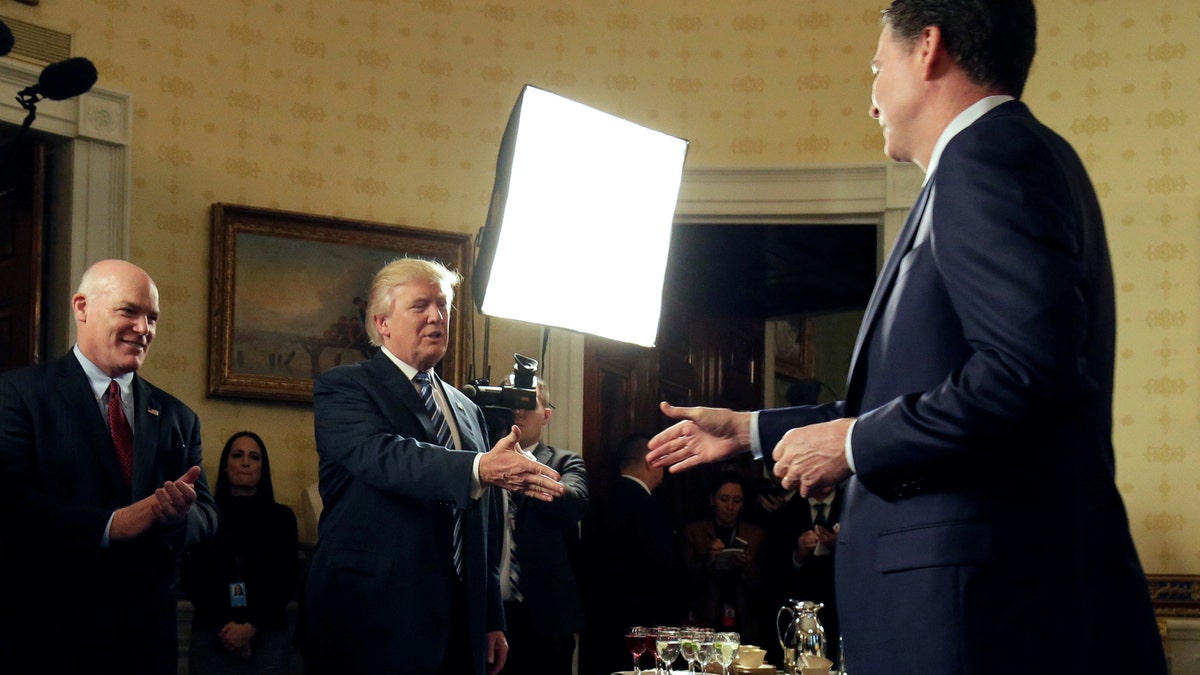
The Trump administration is free to seek to appeal Currie’s dismissals to the Fourth Circuit U.S. Court of Appeals, and Bondi vowed to do so “immediately” last week at a conference in Memphis.
Currie dismissed Comey’s case and James’ case “without prejudice” — a detail that could leave the door open for the government to secure new indictments, should it choose to do so.
But any attempts to bring new charges against either Comey or James would be held up further by appellate court review. It is unclear how long that process could take and many court watchers have declined to speculate on the process, given the many uncertainties that remain at play.
Statute of limitations concerns
Comey’s case in particular has raised unique and potentially tricky questions for the Justice Department.
Comey was charged with making false statements to Congress and for obstruction related to his testimony in September 2020. Both charges had a five-year statute of limitations that expired Sept. 30 — just three days after Bondi installed Halligan at the U.S. Attorney’s Office.
It is unclear whether the judge’s order “resets the clock” on the statute of limitations under a federal law, as Trump’s allies have argued it should. The statute would give the Trump administration six additional months from the date of Currie’s dismissal to re-indict Comey.
Under the same law, a dismissal by the Fourth Circuit U.S. Court of Appeals would trigger a 60-day window for the Trump administration to re-indict Comey.
Currie’s ruling addresses just one of two major issues that Comey’s lawyers cited in their effort to toss his criminal case, however — and any attempt to revive the case or reverse the dismissal is widely expected to be featured heavily into the second motion to dismiss.
FBI AGENTS SUE TRUMP DOJ TO BLOCK ANY PUBLIC IDENTIFICATION OF EMPLOYEES WHO WORKED ON JAN. 6 INVESTIGATIONS
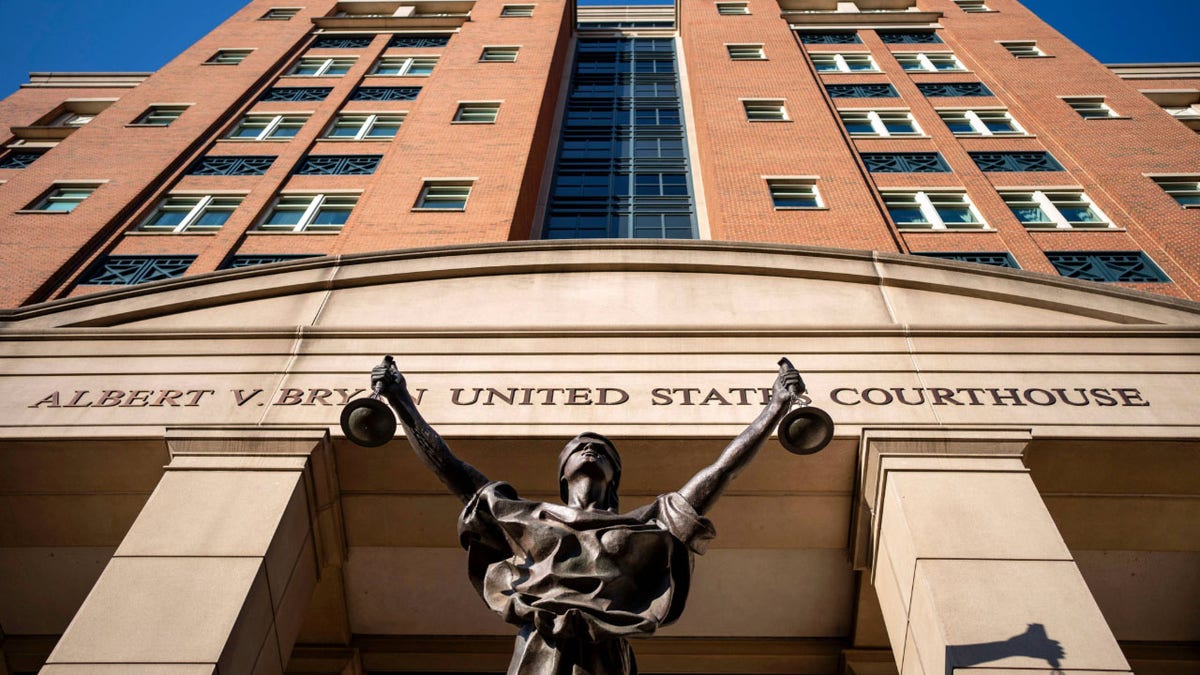
Vindictive, selective prosecution
Comey’s lawyers filed not one, but two motions to dismiss his criminal case. The second filing seeks to do so as a result of what Comey’s lawyers argued is “vindictive” and selective prosecution by the Justice Department.
“President Trump ordered the Department of Justice to prosecute Mr. Comey because of personal spite and because Mr. Comey has frequently criticized the president for his conduct in office,” Comey’s lawyers, Patrick Fitzgerald and Jessica Carmichael, said in the motion to dismiss, filed in late October.
The motion ticks through the years-long, strained relationship between Trump and his onetime FBI director, which Comey’s lawyers said bolsters their claim that the indictment “arises from multiple glaring constitutional violations and an egregious abuse of power by the federal government.”
Unlike the motion to dismiss the case based on the unlawfulness of Halligan’s appointment, which was reviewed by an outside judge, Comey’s motion to dismiss was slated to be heard by U.S. District Judge Michael Nachmanoff, the district judge assigned to Comey’s case.
It would be expected to come into play immediately, should an appeals court reverse Currie’s ruling, since the motions to dismiss must be reviewed by a court before the start of a criminal trial.
It would also almost certainly involve witness testimony from Trump officials with knowledge of the case to speak to what steps the administration took in the run-up to Comey’s indictment, the timing of the charges brought against him and who in the administration ordered certain actions.
MAURENE COMEY SUES DOJ FOR ‘UNLAWFUL’ FIRING, DEMANDS REINSTATEMENT
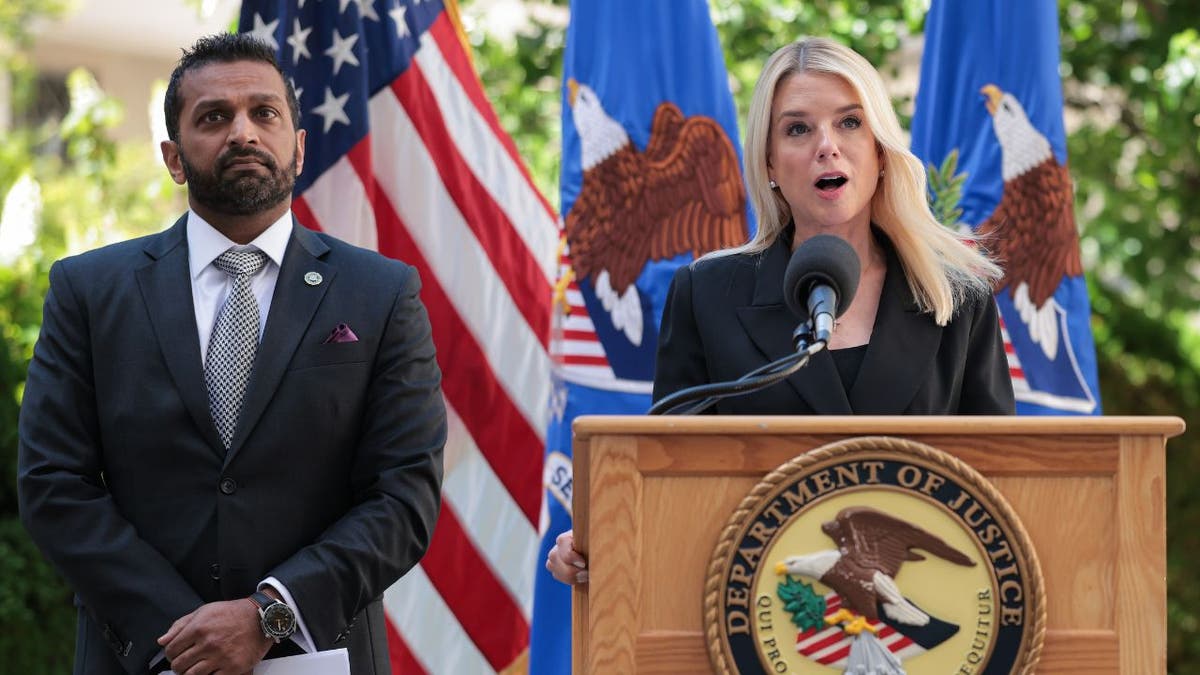
Lawyers for Comey asked Nachmanoff to dismiss the case with prejudice — an outcome that, if granted, would block the government from seeking to re-indict Comey for the same actions.
Still, it is notoriously difficult to have a case tossed on the grounds of selective or vindictive prosecution, and in order to do so, Comey’s legal team must prove to the court both that prosecutors were acting with genuine animus in bringing the case against him — and that prosecutors singled him out because of that animus.
Still, his lawyers presented an abundance of evidence in their filing that they argued satisfies that burden, and which primarily includes statements and admissions made by Trump and by senior administration officials.
“Objective evidence establishes that President Trump directed the prosecution of Mr. Comey in retaliation for Mr. Comey’s public criticisms and to punish Mr. Comey because of personal spite,” his lawyers said.
Short of outright dismissal, the next steps would be expected to involve additional discovery and an evidentiary hearing.
Next steps
In the meantime, Bondi told reporters that Halligan will remain in her post at the U.S. Attorney’s Office.
As of this writing, neither the Trump administration nor Comey’s lawyers seem to think the case is mooted.
Comey’s lawyers vowed to continue the fight after his case was dismissed: “We will continue to challenge any further politically motivated charges through every lawful means available,” Comey’s lawyer, Abbe Lowell, said in a statement last week.
And Comey himself also weighed in on the matter in a video posted last week to social media.
Trump “will probably come after me again, and my attitude’s going to be the same,” Comey said, shortly after his case was dismissed. “I’m innocent. I am not afraid. And I believe in an independent federal judiciary.”
Senior Trump administration officials have said much of the same.
“This will not be the final word on this matter,” White House spokesperson Abigail Jackson said last week.
And Patel, for his part, suggested in the interview on Saturday that the Trump administration is readying “multiple” responses, which could come sooner than later.
As for timing, Patel said to “stay tuned for right after Thanksgiving,” though he declined to elaborate further, due to what he said was the appeals court process.
The FBI did not immediately respond to Fox News Digital’s request for comment on Patel’s remarks, or on next steps in Comey’s case.
Read the full article here


